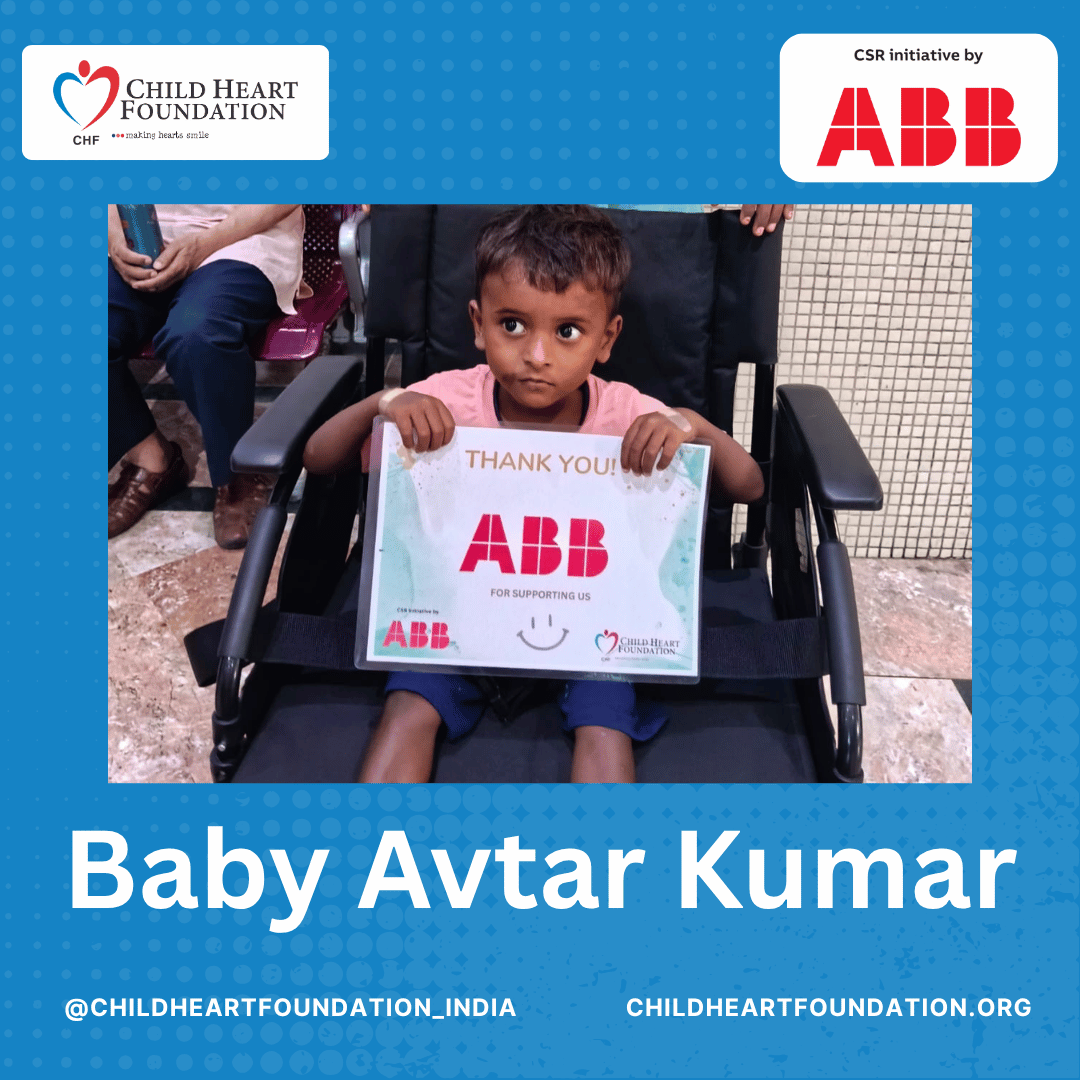
Pt Avtar
A Heart Full of Hope
Avtar’s Heart Treatment Journey: From Frequent Illness to a Healthier Heart
Three-year-old Avtar from Delhi appeared healthy during the first year of his life.
He was born through a normal delivery at Sanjay Gandhi Hospital, and initially, his parents had little reason to worry about his health.
But as Avtar grew older, things slowly began to change.
His family noticed that he often seemed weak and tired. His appetite was poor, and he experienced frequent episodes of cough and cold. At first, these symptoms did not appear to point toward a heart condition.
Eventually, a serious episode of pneumonia led to an important discovery.
A Hospital Admission Revealed His Heart Defect
At around 2.5 years of age, Avtar developed pneumonia and was admitted to Sanjay Gandhi Hospital for nine days.
During his medical evaluation, doctors performed an echocardiogram to examine his heart more closely.
The test revealed that Avtar had an Atrial Septal Defect (ASD), a congenital heart defect involving an opening between the upper chambers of the heart.
For his parents, the diagnosis finally provided an explanation for the health challenges their young son had been experiencing.
But it also brought a new concern—how would they afford his specialized cardiac treatment?
Financial Challenges Should Not Stop a Child’s Treatment
Avtar’s father works as a barber and earns approximately ₹1 lakh annually.
With limited financial resources, arranging the cost of specialized pediatric cardiac treatment was extremely difficult for the family.
Through the support of ABB India Foundation, the financial cost of Avtar’s treatment was supported, enabling him to receive the cardiac intervention he needed.
Successful ASD Device Closure
On 23 July 2026, Avtar successfully underwent an ASD Device Closure.
The procedure provided treatment for his congenital heart defect without the family having to carry an overwhelming financial burden.
For Avtar’s parents, seeing their little boy successfully complete his treatment brought immense relief and renewed hope.
A Healthier Future for Avtar
Following the procedure, Avtar is recovering well and making encouraging progress.
His journey shows how symptoms that may initially appear unrelated to the heart can sometimes lead to the diagnosis of an underlying congenital heart defect.
It also highlights the importance of appropriate medical evaluation and echocardiography in detecting heart defects in children when clinically recommended.
From repeated illness and pneumonia to the discovery of ASD and successful treatment, Avtar and his family have travelled a challenging journey.
Today, they can look toward his future with greater confidence and hope.
For Avtar, successful treatment meant more than closing a hole in his heart.
It meant a chance to grow stronger.
A chance to leave repeated illness behind.
A chance to enjoy a more active childhood.
And a chance to grow up with a healthier heart.
Child Heart Foundation works to help underprivileged children with congenital heart defects access timely diagnosis, specialized pediatric cardiac care, life-saving treatment, and continued follow-up support.
Saving Hearts. Transforming Futures.